 Sumas Window
 Roofing for Acme's Wet, Wooded Conditions
Acme sits in the forested foothills south of Deming, tucked into a corner of Whatcom County that sees more standing shade, more moisture, and a longer wet season than the open valley floor closer to Bellingham Bay. Tree cover keeps roofs damp longer after a storm, and the broader Whatcom County corridor deals with the same driving rain and marine-influenced air that pushes moisture into every gap a roof will give it. A roof built for a drier climate, or installed without the details this area demands, tends to show its age early here — moss in the shaded valleys, soft decking near chimneys and skylights, and shingles that granulate faster than they should.
A new roof installation is one of the few home projects where doing it right the first time actually saves money, because almost every roofing problem we get called out to fix traces back to a shortcut taken during the original install — not a bad shingle bundle. This page covers what a correct new roof looks like for a home in Acme specifically, what our process involves, and why local experience matters more here than in a lot of other places.
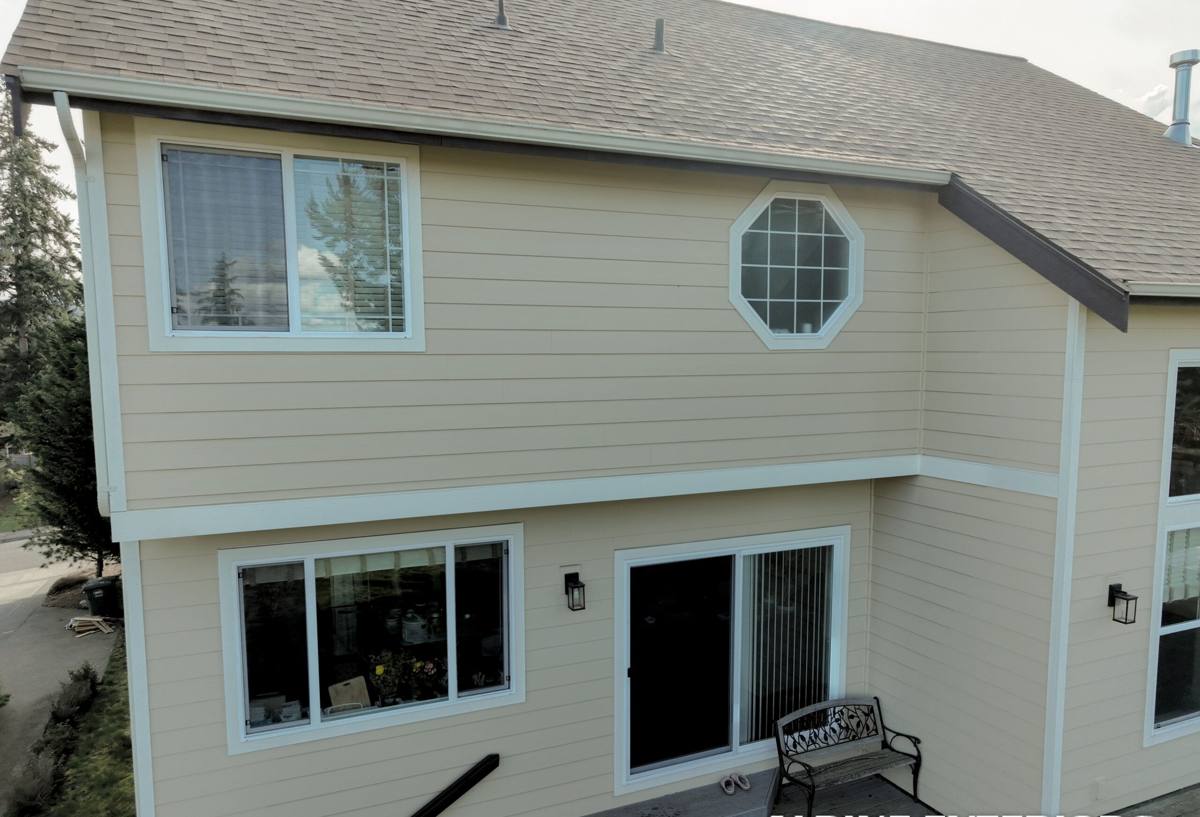
What Acme Homes Actually Need From a New Roof
The material on top of the roof gets most of the attention, but it's the layers underneath and the details around penetrations that determine whether a roof holds up through a Whatcom County winter. For a property in Acme's tree-heavy terrain, three things matter more than average:
- Ventilation that actually moves air. Shaded roofs dry out slower. Without balanced intake and exhaust venting, trapped moisture condenses in the attic and feeds both moss growth on the surface and rot underneath the decking.
- Ice-and-water shield at every vulnerable point. Valleys, eaves, and anywhere two roof planes meet need a self-adhering waterproof membrane underneath the shingles, not just felt paper — driving rain finds these seams first.
- Flashing sized and installed for real water volume. Chimneys, skylights, and sidewall intersections need step flashing and counter-flashing that's actually integrated into the roofing layers, not caulked on as an afterthought.
None of this is exotic. It's standard trade practice done correctly, which is exactly what separates a roof that lasts its full rated lifespan from one that starts leaking in year six.
Choosing a Roofing Material for This Area
There's no single "best" roofing material — the right choice depends on your home's exposure, your budget, and how much long-term maintenance you're willing to take on. Here's how the common options stack up for a shaded, moisture-heavy property like the ones we see around Acme:
| Material | Typical Lifespan | Moss/Moisture Resistance | Notes for Acme |
|---|---|---|---|
| Architectural asphalt shingle | 25–30 years | Good with proper venting and zinc/copper strips | Best balance of cost and performance for most homes here |
| 3-tab asphalt shingle | 15–20 years | Fair | Lower upfront cost, but shorter life under heavy shade |
| Metal (standing seam) | 40–50+ years | Excellent — sheds moss naturally | Higher upfront cost, minimal moss maintenance long-term |
| Wood shake | 20–25 years | Poor without diligent upkeep | We generally steer clients away from shake on heavily shaded lots — the maintenance burden and moisture retention are tough to keep ahead of |
Asphalt architectural shingles remain the most common choice for good reason: modern products handle Pacific Northwest moisture well when installed with proper ventilation and zinc or copper strips near the ridge to slow moss regrowth. Metal is worth a serious look on heavily shaded lots where moss has been a recurring fight, since it doesn't give algae and moss the foothold that asphalt granules do.
Moss and Moisture: The Acme-Specific Problem
Moss doesn't just sit on top of shingles looking bad — its root structure holds moisture against the roof surface and, over years, lifts shingle edges and works granules loose. On a shaded lot, moss can return within a season or two even after a cleaning, which is why we treat moss prevention as part of the installation, not an afterthought:
- Zinc or copper ridge strips installed at the ridge line during roofing, so rain carries trace metal ions down the roof slope
- Wider-than-minimum drip edge and proper eave detailing so water sheds instead of pooling at the lowest course
- Trimming recommendations for overhanging limbs where we can flag them, since sunlight exposure is the single biggest factor in whether moss comes back
- Gutter and downspout sizing that matches actual rainfall volume, not just code minimum
None of these steps add much to the cost of a new roof, but skipping them is exactly why so many roofs in shaded, wooded settings need moss treatment or premature repair within the first five years.
Our New Roof Installation Process
Every full roof replacement we do follows the same sequence, regardless of the material chosen:
- On-site inspection and estimate. We walk the roof, check the attic for existing moisture or ventilation issues, and measure for an accurate material quote — not a rough guess from the ground.
- Tear-off to bare decking. We remove the old roofing completely rather than layering over it, which lets us actually see the condition of the sheathing underneath.
- Decking repair. Any soft, rotted, or delaminated plywood or OSB gets replaced before anything new goes down — this is the step that gets skipped most often on rushed jobs, and it's the one that causes leaks later.
- Underlayment and ice-and-water shield. Synthetic underlayment across the field, self-adhering membrane at valleys, eaves, and penetrations.
- Flashing. New step flashing, counter-flashing, and pipe boots at every chimney, skylight, vent, and wall intersection.
- Roofing material installation. Installed to manufacturer spec for nail pattern and exposure, which matters for both wind rating and warranty validity.
- Ventilation check and correction. Intake and exhaust venting balanced to the attic's actual square footage.
- Cleanup and final walkthrough. Magnetic nail sweep of the property, debris hauled off, and a walk-through so you know exactly what was done.
Cost Factors on a Roof Replacement
Every roof is priced individually, but the factors that move the number up or down are consistent. Here's what actually drives cost:
| Factor | Why It Matters |
|---|---|
| Roof size and number of planes | More square footage and more valleys/hips mean more material and labor time |
| Roof pitch and access | Steep or hard-to-access roofs require more safety setup and take longer |
| Decking condition | Rotted or soft sheathing found during tear-off adds material and labor to replace |
| Material choice | Architectural asphalt, metal, and other materials carry different per-square costs |
| Number of penetrations | Each chimney, skylight, and vent stack adds flashing labor |
| Layers of existing roofing | Multiple old layers mean more tear-off time and disposal weight |
We give a firm, written quote after the on-site inspection — not a phone estimate — because decking condition and penetration count can only be assessed accurately in person.
Signs Your Roof Needs Replacing, Not Just Repair
A repair makes sense for isolated damage. A full replacement makes more sense once a roof is showing systemic wear. Watch for:
- Granules collecting in gutters or at downspout outlets in noticeable amounts
- Shingles that are curling, cracking, or missing across multiple areas, not just one spot
- Moss or dark streaking that returns quickly after cleaning
- Daylight visible through the attic sheathing, or damp insulation after a rainstorm
- A roof already at or past 20–25 years old, even if it looks intact from the ground
- Soft spots you can feel underfoot when walking the roof
- Leaks that show up in more than one interior location
If you're only seeing one or two of these, a targeted repair may still be the right call — we'll tell you honestly if that's the case rather than pushing a full replacement you don't need yet.
Why Local Experience in Acme Matters
A crew that regularly works this part of Whatcom County already knows which roof lines here fight moss the hardest, which valleys take the worst of the driving rain, and how much attic ventilation a shaded, tree-covered lot actually needs versus a roof out in the open. That's not something you get from a general contractor passing through once. It shows up in fewer callbacks, fewer surprises during tear-off, and a roof that's built for the conditions it will actually face — not a generic spec sheet.
If you're weighing a new roof for your Acme home, we're happy to take a look and give you a straightforward, no-pressure estimate — including an honest read on whether a repair could still buy you a few more years. Fill out the form below to get started.