 Sumas Window
 Why Siding Choice Matters More in Nooksack Than Most Places
Nooksack sits in a part of Whatcom County where the weather doesn't give siding much of a break. You're close enough to the water and the river valley to get salt-laden air working on fasteners and finishes, you're in a rain belt that pushes moisture sideways during winter storms, and you get long stretches of gray, damp weather every year that keep exterior surfaces wet far longer than they'd stay wet in a drier climate. That combination — salt air, driving rain, and a moss season that can run from fall through spring — is exactly the kind of environment that separates siding products that hold up from siding products that just look good on installation day.
A lot of siding failures we see on older Nooksack homes aren't really about bad luck. They're about a product or an installation detail that wasn't matched to this climate in the first place. Picking the right material and installing it correctly the first time costs less over the life of the house than replacing or patching siding every decade because it was never suited to the job.
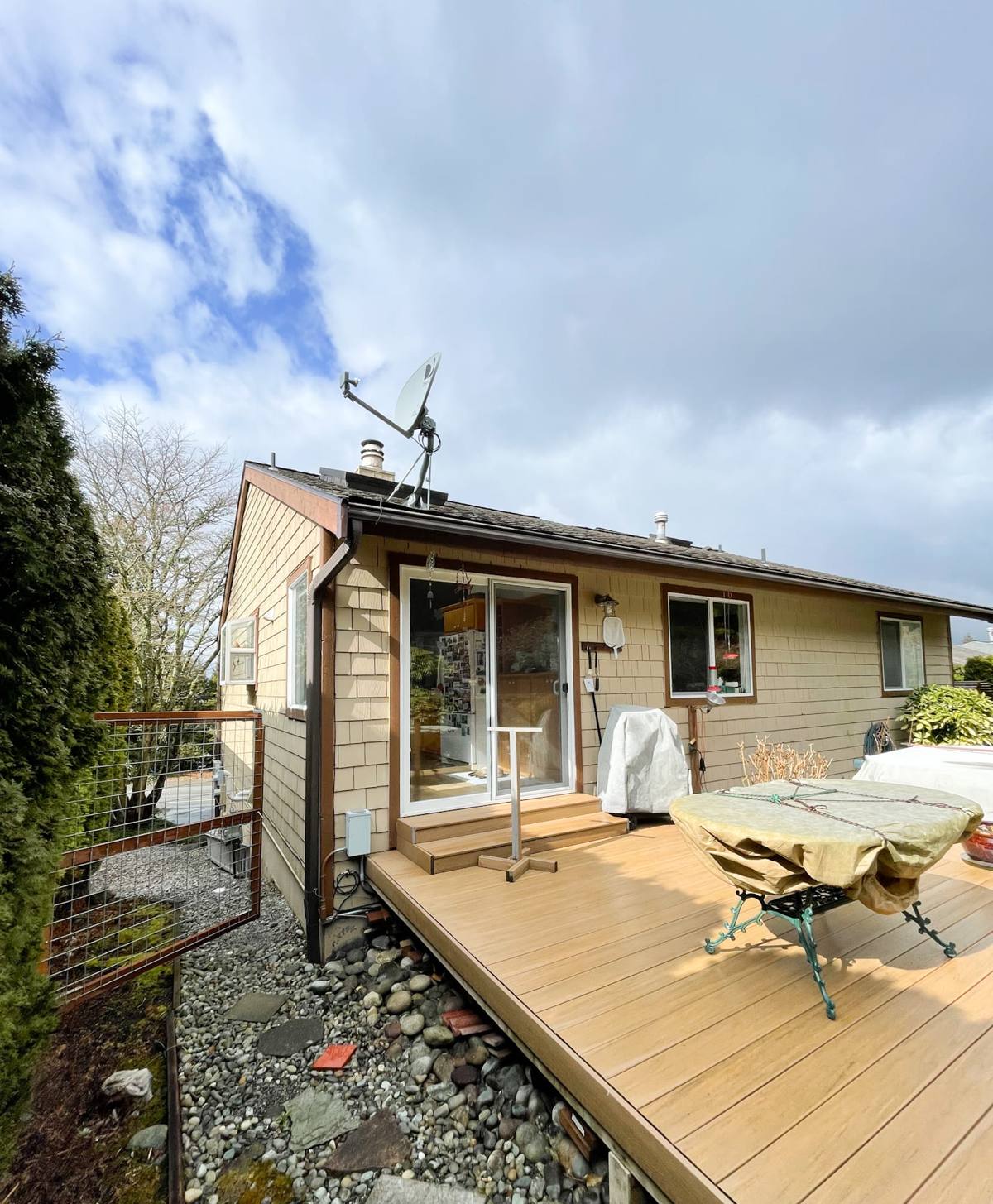
What Salt Air, Driving Rain, and Moss Actually Do to Siding
Salt Air and Metal Fasteners
Proximity to marine air accelerates corrosion on anything that isn't rated for it — nails, screws, trim flashing, even some cheaper factory coatings. Corroded fasteners loosen, streak, and eventually let siding panels move or separate from the wall, which opens the door to water intrusion.
Driving Rain and Wind-Driven Moisture
Whatcom County storms don't just drop rain straight down — wind pushes it sideways into seams, laps, and trim joints. Siding that relies on tight, well-caulked seams instead of proper lap geometry and flashing detail will eventually let water behind the cladding, where it can sit against sheathing and framing far longer than anyone notices from the outside.
Moss, Algae, and Prolonged Dampness
A long moss season means north-facing walls, shaded siding, and anything under trees stays damp for extended periods. Organic growth isn't just cosmetic — moss and algae hold moisture against the siding surface, and on products that are sensitive to sustained moisture exposure, that constant dampness shortens the material's usable life.
Why We Install James Hardie Fiber Cement — and Nothing Else
We made a deliberate decision as a company to install only James Hardie fiber cement siding. We don't install vinyl, LP SmartSide, Cemplank, Allura, or bare cedar or primed spruce, and we're upfront about why: in a climate like this one, those products all ask homeowners to accept trade-offs — moisture sensitivity, maintenance burden, finish durability, or fire performance — that we don't think are worth it when a better option exists.
James Hardie fiber cement is non-combustible, dimensionally stable in wet-dry cycling, and available in HZ5 climate-engineered formulations built for exactly the kind of wind-driven rain and moisture cycling the Pacific Northwest sees. The factory-applied ColorPlus finish is baked on under controlled conditions rather than field-painted, which means better adhesion and color retention than most site-applied coatings, and it comes with a long transferable warranty backing both the substrate and the finish. That's the combination we want standing on a Nooksack home: a material engineered for this weather, a finish that holds up to UV and moisture without repainting every few years, and a warranty that actually means something if something does go wrong.
We're not saying every other siding product is unusable everywhere — plenty perform fine in the right climate and with the right maintenance commitment. We're saying that for the homes we build and repair siding on in this county, Hardie is what we're willing to put our name behind.
What a Correct Siding Installation Actually Involves
Siding is only as good as the assembly behind it. A beautiful Hardie plank job with the wrong flashing detail or the wrong fastener spacing will still leak. Here's what we treat as non-negotiable on every job:
- Weather-resistive barrier installed and lapped correctly, with all penetrations (pipes, vents, hose bibs) properly flashed before siding goes on
- Rainscreen or drainage plane where conditions call for it, so any moisture that does get behind the siding can drain and dry instead of sitting against the sheathing
- Correct clearances — siding held up off decks, patios, and grade per manufacturer spec, so it isn't wicking moisture from below
- Fastener type and spacing matched to Hardie's published installation specs, using corrosion-resistant fasteners appropriate for a marine-influenced climate
- Proper lap and joint treatment at butt joints, corners, and window and door trim, so water sheds outward instead of being trapped in a seam
- Factory-cut edges primed or sealed wherever field cuts expose raw fiber cement
Skip any one of these and you can still end up with a wall that looks right for a year or two before problems start showing up — usually right around window trim, at the bottom course, or on the wall that takes the worst of the weather.
Our Siding Installation Process for Nooksack Homes
1. On-Site Assessment
We walk the home, check the condition of the existing siding and the sheathing underneath where accessible, and look at how each elevation is exposed — which walls take the most wind-driven rain, which stay shaded and damp, where moss and algae are already established.
2. Tear-Off and Substrate Check
Old siding comes off and we inspect the sheathing and framing underneath for rot or moisture damage before anything new goes up. Any water-damaged material gets addressed at this stage, not covered over.
3. Weather Barrier and Flashing
We install or verify the weather-resistive barrier and flash every penetration, window, and door opening before the first piece of siding is hung.
4. Hardie Installation to Spec
Panels or planks go up following James Hardie's published fastening, spacing, and clearance requirements — not shortcuts, not "close enough."
5. Trim, Caulk, and Paint Touch-Up
Trim and joints get sealed with products compatible with the ColorPlus finish, and any factory-cut edges are properly sealed.
6. Final Walkthrough
We walk the finished job with the homeowner, point out what was done at flashing and trim details, and cover basic care going forward.
Choosing the Right Hardie Product Line for This Climate
James Hardie makes several siding profiles, and the right one for a Nooksack home depends on the style of the house and how exposed it is to wind and rain.
| Hardie Product | Best Suited For | Climate Notes |
|---|---|---|
| HardiePlank Lap Siding | Traditional and craftsman-style homes | HZ5 formulation handles freeze-thaw and wet cycling common here |
| HardiePanel Vertical Siding | Modern builds, accent walls, gable ends | Needs correct joint flashing at seams to shed driving rain |
| HardieShingle | Cottage or Pacific Northwest cedar-look homes | Good moisture performance without the upkeep of real cedar shakes |
| HardieTrim | Window, door, and corner trim on any of the above | Pairs with ColorPlus finish for consistent, low-maintenance trim |
Most Nooksack homes we work on use HZ5 planks for the main field of the wall, with HardieTrim around openings and corners. The exposure of each elevation — how much wind-driven rain and shade it gets — is part of what we factor into the recommendation.
Cost Factors for a Nooksack Siding Project
Every siding job is priced around the specifics of the house, but a few factors consistently move the number more than others:
| Factor | Why It Matters |
|---|---|
| Tear-off vs. new construction | Removing old siding, disposal, and any sheathing repair adds labor beyond a bare-wall install |
| Wall complexity | Dormers, multiple gables, and cut-up elevations take more time and material waste than a simple rectangular wall |
| Substrate condition | Rot or moisture damage found during tear-off has to be repaired before new siding goes on |
| Profile and trim detail | Board-and-batten, shingle accents, and heavier trim packages cost more than a straightforward lap job |
| Site access | Steep lots, tight setbacks, or limited staging area affect labor time and equipment needs |
We give a written estimate that breaks these out so homeowners can see what's driving the price rather than getting a single lump number.
Living With New Siding Through a Whatcom County Moss Season
Fiber cement siding is low-maintenance compared to wood or vinyl, but "low-maintenance" doesn't mean "zero-maintenance" in a climate that grows moss on north-facing walls every year. A simple annual routine keeps a Hardie exterior looking right:
- Rinse siding with a garden hose and soft brush once or twice a year, focusing on shaded and north-facing walls where moss and algae take hold first
- Avoid pressure washing directly into laps and seams — it can force water behind the siding
- Keep gutters clear so overflow isn't running down the wall face
- Trim back vegetation and tree limbs that keep a wall shaded and damp
- Check caulking at trim joints and penetrations every couple of years and re-seal as needed
- Address any impact damage (branch strikes, equipment bumps) promptly rather than letting a chip sit exposed
None of this is heavy work, but skipping it entirely for years at a time is how moss gets a foothold and how small caulk failures turn into bigger moisture problems.
Why Hiring a Crew That Already Works in Nooksack Matters
Siding installation isn't just about following a manufacturer's install guide in general terms — it's about applying that guide correctly to the specific exposure conditions of a specific wall on a specific street. A crew that already works siding jobs around Sumas and the Nooksack area knows which elevations in this area typically take the worst wind-driven rain, understands how the local moss and algae pattern behaves through the year, and has already worked through the practical realities of local permitting and typical lot conditions. That local familiarity translates into fewer surprises during tear-off, better judgment calls on flashing and drainage in the field, and a finished job that's actually built for the weather it has to survive here — not a generic installation dropped onto a Whatcom County home.
If you're weighing a siding replacement or planning new siding for a Nooksack home, we're happy to walk the property, look at what's there now, and talk through what a James Hardie installation would look like for your specific house. There's no pressure and no obligation — just a straightforward look at the job and a written estimate you can take your time with. The form below is the easiest way to get that conversation started.