 Sumas Window
 Why Acme Homes Need Windows Built for This Climate
Acme sits in a stretch of Whatcom County that takes weather seriously. The wind comes off the water carrying salt air, storms roll through with driving rain rather than a gentle sprinkle, and the shoulder seasons bring a long stretch of damp, low-light days where moss and mildew get a real foothold on anything that holds moisture. Windows are one of the few parts of a house that have to stand up to all three of those conditions at once, every single day, for decades. A window that's fine in a drier inland climate can fail early here — not because it's a bad window, but because it was never asked to handle this much sustained moisture and salt exposure.
Custom windows for a specific area like Acme aren't about fancy shapes or showroom upgrades. They're about matching the unit — frame material, glazing, and installation detailing — to what the house actually faces: wind-driven rain hitting the wall at an angle, salt-laden air working on hardware and finishes, and moss that will colonize any ledge, sill, or corner that stays wet too long.
What "Custom" Actually Means for Acme's Housing Mix
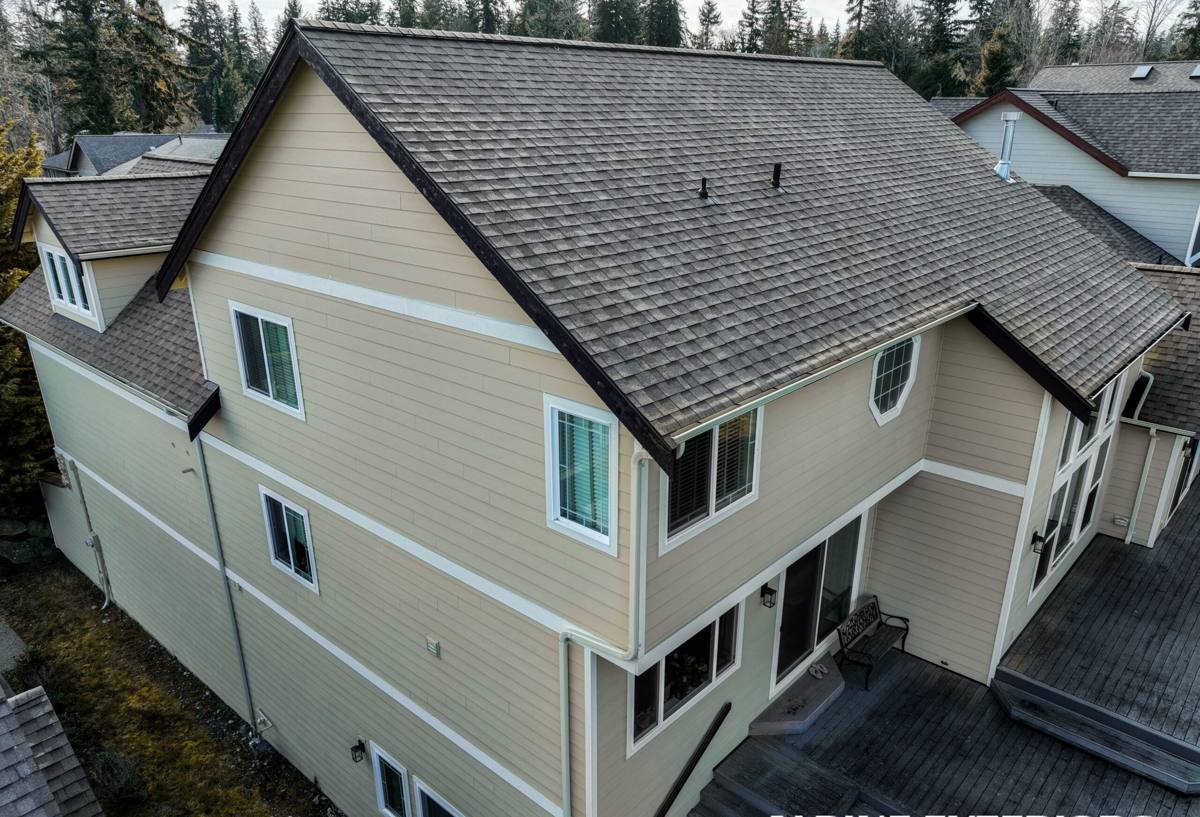
Acme, like most of this part of Whatcom County, has a mixed housing stock — older farmhouses and rural homes built decades ago sitting alongside newer construction. That mix matters more than most homeowners expect, because "custom" means something different depending on what you're starting with.
New Construction vs. Replacement Windows
New construction windows go into a fresh opening with a nailing flange, built for new framing and new flashing details. Replacement windows go into an existing opening, often reusing the original frame or working around trim, siding, and interior finishes you don't want to tear out. Get this wrong — using a new-construction unit in a retrofit situation, or vice versa — and you end up with a window that either doesn't seal properly or costs far more in labor than it should have. Every Acme project starts with figuring out which category each opening actually falls into, sometimes window by window on the same house.
Matching Non-Standard Openings
Older homes in this area rarely have perfectly square, standard-sized openings. Decades of settling, past remodels, and original construction methods that predate modern standard sizing all mean an opening can be off by enough that an off-the-shelf window won't fit without gaps that get packed with foam and hoped for. Custom sizing means the window is built to the actual opening, not the other way around. That's especially important here, because any gap around a window is a place for wind-driven rain to find its way in.
Materials and Frame Choices That Hold Up Locally
Frame material is the first decision, and it's worth more thought than most people give it. In a climate with this much sustained moisture and salt exposure, the wrong frame material shows its age fast — sticking sashes, discolored finishes, or corroded hardware within a few years instead of a few decades.
| Frame Material | Moisture & Salt Resistance | Maintenance | Typical Lifespan |
|---|---|---|---|
| Vinyl | Good — won't rot or corrode, but low-quality vinyl can warp with heavy temperature swings | Low — occasional cleaning | 20-30 years |
| Fiberglass | Very good — stable in wet, salty air and resists warping | Low | 30-40+ years |
| Wood-clad | Fair to good — the exterior cladding protects the wood core, but any breach in the seal invites rot | Higher — seals and finishes need periodic attention | 20-30+ years with upkeep |
| Aluminum | Poor to fair without thermal breaks — prone to condensation and, over time, corrosion near salt air | Moderate | 15-25 years |
We don't push wood-clad frames on every Acme project, and that's a maintenance call, not a knock on wood as a material. A wood-clad frame looks great and performs well, but only if the exterior seal is inspected and kept up — and in a climate that stays damp for months at a stretch, a missed year of maintenance can let moisture behind the cladding before anyone notices. For homeowners who don't want that ongoing commitment, vinyl or fiberglass gives you most of the performance without the upkeep burden.
Glass Packages Worth Paying For in This Climate
The glass package matters as much as the frame, and it's where a lot of the real performance difference lives.
- Double-pane with Low-E coating and argon fill is the practical baseline for this area — it manages heat loss and cuts down on interior condensation during cold, damp stretches.
- Triple-pane adds meaningful comfort and sound dampening, and it's worth considering on north- or west-facing walls that catch the worst of the driving rain and wind, though it costs more and adds weight to the sash and hardware.
- Warm-edge spacers (instead of older metal spacers) reduce the cold spot at the glass edge where condensation and, eventually, mold tend to start.
- Tempered or laminated glass is worth discussing for ground-floor windows or larger picture units, both for safety code compliance and impact resistance.
None of this is about chasing the highest spec number available. It's about matching the glass package to how exposed a given wall or window actually is, so you're not overpaying on a sheltered window or underbuilding one that takes the brunt of the weather.
The Installation Details That Prevent Leaks and Rot
More window failures in this climate come from installation mistakes than from bad products. Driving rain finds any gap, and once water gets behind a window frame with nowhere to drain, it's only a matter of time before you're dealing with rot, mold, or a soft spot in the wall. This is the part of the job that doesn't show up in a brochure but matters more than the window itself.
- Sill pan flashing under every window opening, sloped to drain water back outside instead of into the wall cavity
- Flashing tape integrated correctly with the house wrap or building paper, shingle-style so water sheds outward and downward at every layer
- Proper shimming so the window sits square and doesn't bind or force the seal open over time
- Continuous, compatible sealant at the exterior perimeter — not just at the corners
- Weep holes and drainage paths left clear, not sealed shut by mistake
- Interior air sealing separate from exterior water sealing, so the two systems aren't relying on each other to work
Skip any one of these steps and the window can look perfectly installed for a year or two before a problem shows up — usually as a stain, a musty smell, or a patch of moss or mildew forming just below the sill, which in this climate can happen faster than homeowners expect.
Our Process for an Acme Custom Window Project
- On-site assessment. We look at every opening individually — condition, squareness, existing flashing, and exposure to wind and rain — rather than quoting a house sight-unseen.
- Precise measurement. Each window is measured to the actual opening, not a catalog size, so the units we order fit without excessive shimming or gap-filling.
- Material and glass selection. We walk through frame and glass options against your budget and how exposed each wall is, rather than selling one package for the whole house.
- Removal and prep. Old units come out carefully, and we inspect the framing and sheathing underneath for any hidden moisture damage before anything new goes in.
- Installation with full flashing and sealing detail. This is where the checklist above gets followed on every single opening, not just the ones that are easy to reach.
- Final check and cleanup. We test operation, check the seal, and clean up the work area before we consider the job done.
Cost Factors for Custom Windows in Acme
Costs for a custom window project vary a lot from house to house, and anyone who quotes a flat per-window price without seeing the openings is guessing. The honest answer is that it depends on several factors that stack together.
| Factor | Why It Moves the Price |
|---|---|
| Window size and shape | Larger units, arched tops, or custom shapes cost more to manufacture and install than standard rectangles |
| Frame material | Vinyl is generally the most affordable; fiberglass and wood-clad cost more upfront but bring different lifespan and maintenance tradeoffs |
| Glass package | Triple-pane, tempered, or laminated glass all add cost over a standard double-pane Low-E unit |
| New construction vs. replacement | Retrofit work around existing trim and siding can involve more careful labor than a straightforward new-construction install |
| Opening condition | Rot, out-of-square framing, or hidden moisture damage found during removal adds repair work before the new window goes in |
| Number of windows | Doing several openings in one visit typically costs less per window than one-off jobs done separately |
Rather than throwing out a number that doesn't mean much until we've seen your home, we'd rather walk the openings with you and give you a real figure based on what's actually there.
Why Hire a Crew That Already Works in Acme
A contractor who works regularly in and around Acme has already seen how this climate treats windows over time — which frame materials hold up, which installation shortcuts cause callbacks two winters later, and how moss and moisture behave on this side of Whatcom County specifically. That's not something you get from a national installer who covers a huge territory and treats every job the same way regardless of local conditions.
There's also a practical side to it: if a seal ever needs a look or a window needs adjustment down the road, a local crew can get back out to your property without the delay and overhead of a company based hours away. For a purchase you expect to last decades, that kind of accessibility matters as much as the installation itself.
If you're weighing custom windows for a home in the Acme area, we're happy to come take a look, measure your openings, and put together a straightforward, no-pressure estimate — just fill out the form below to get started.