 Sumas Window
 Windows Built for Van Zandt's Weather, Not a Showroom
Van Zandt sits in the stretch of Whatcom County between Sumas and the foothills, where the weather doesn't do things by half measures. Homes out here take on driving rain off the Fraser Valley, damp salt-tinged air working in from the Sound, and a moss season that can run from October clear through April. Windows in this area don't fail because they're old — they fail because moisture found a way in and nobody caught it until the sill was soft. We've replaced enough of them in Van Zandt and around Sumas to know exactly where that happens and how to build a job that doesn't repeat the problem.
This page is about window replacement specifically for Van Zandt homes — what the local climate does to a window over time, what a correctly done replacement actually involves, and why it matters that the crew doing your install already knows this ground.
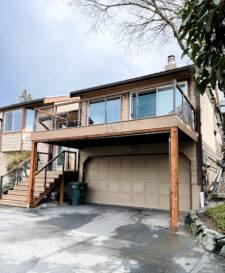
What Whatcom County Weather Does to a Window
Every region has its own way of wearing out a window. Here's what we see most in Van Zandt and the surrounding Sumas area:
- Driving rain that hits at an angle: storms coming off the valley don't fall straight down — they push sideways into west- and south-facing walls, which puts real pressure on flashing and sealant that a calmer climate never tests.
- Salt-bearing air: even inland from the coast, moist salt-tinged air corrodes hardware, screws, and low-grade aluminum components faster than a dry climate would.
- A long moss and mildew season: constant dampness plus shade from mature trees means moss and mildew get a foothold on sills, trim, and anywhere water sits instead of draining.
- Freeze-thaw swings: Whatcom County gets enough cold snaps to stress any gap where water has already worked its way into wood or framing.
None of this means Van Zandt is a hard place to keep windows in good shape — it means the install has to account for these conditions from the start, not patch around them later.
The Telltale Signs We Look For
If you're not sure whether it's time, these are the signals we take seriously on a Van Zandt home:
- Sashes that stick, drag, or won't stay up on their own
- Soft or discolored wood at the sill or bottom corners of the frame
- Visible moss, algae, or persistent black streaking on trim or the exterior casing
- Fogging or a milky haze between panes of a double-pane unit — the seal has failed
- Cold drafts near the frame even with the window fully latched
- Condensation forming on the inside of the glass in cold weather, especially at the edges
What a Correct Replacement Actually Involves
A window replacement isn't just swapping the glass unit — it's rebuilding the barrier between your house and the weather at that opening. In a climate like this one, skipping steps is exactly how the next round of moisture damage gets built in from day one. Here's what we do at every opening:
1. Full Removal and Inspection
We pull the old window completely and inspect the framing underneath — not just glance at it. This is where hidden rot or soft wood from years of moisture intrusion shows up, and it's the one point in the whole job where you can actually see and fix a problem before it's sealed behind new trim.
2. Flashing and Weather Barrier, Done Properly
Given how much driving rain this area gets, flashing is not optional and it's not a place to cut corners. We integrate new flashing with the existing weather-resistive barrier so water is directed out and away from the frame, not trapped behind it.
3. Correct Sealing — Inside and Out
Sealant fails from UV exposure, movement, and age — and in a wet climate a failed seal turns into a rot problem fast. We seal both the exterior and interior properly, understanding that an airtight interior seal paired with a vapor-permeable exterior detail is what actually keeps a wall assembly dry over the long run.
4. Level, Plumb, and Properly Shimmed
A window that's out of square binds, doesn't lock tight, and leaves gaps that widen every year. We take the time to set it right the first time.
5. Clean Finish Work
Trim, caulking, and touch-up paint or stain get finished to match — not left as an obvious patch job.
Choosing the Right Window for This Climate
Not every window on the market is built for a wet, moss-prone climate like ours, and the "right" choice depends more on maintenance tolerance and moisture behavior than on brand names. Here's how the common frame materials stack up for a Van Zandt home:
| Frame Material | How It Handles Local Moisture | Maintenance | Our Take |
|---|---|---|---|
| Vinyl | Won't rot, doesn't corrode, handles damp conditions well | Low — occasional cleaning | Our default recommendation for most Van Zandt homes; solid value and low long-term risk |
| Fiberglass | Excellent moisture and temperature stability, very low expansion/contraction | Low | Strong option where budget allows, especially on more exposed walls |
| Wood (clad exterior) | Good if the exterior cladding stays intact; interior wood still needs upkeep | Moderate to high | We install these when the look matters, but we're upfront that they need more attention here than in a drier climate |
| Bare wood | Most vulnerable to this area's rain and moss cycle without diligent upkeep | High | We generally steer homeowners away from this for exterior-exposed openings unless they're committed to regular maintenance |
| Aluminum | Prone to condensation and corrosion in salt-influenced, damp air over time | Moderate | Rarely our first recommendation for this area unless thermally broken |
Glass matters too. For Van Zandt's mix of cold snaps and persistent damp, we typically recommend double- or triple-pane units with a low-E coating and an argon or krypton fill — it cuts down on the interior condensation that feeds mold and mildew growth around the frame.
Cost Factors for a Van Zandt Home
Every home is different, so we won't quote a number without seeing the job, but the main things that move the price are consistent:
| Factor | Why It Matters |
|---|---|
| Number of openings | Whole-house jobs bring a lower per-window cost than one-off replacements |
| Frame material chosen | Vinyl, fiberglass, and clad-wood options carry different material costs |
| Condition of existing framing | Rot or water damage found during removal adds repair work before the new window goes in |
| Window size and configuration | Large picture windows, bays, or custom shapes cost more than standard sliders or double-hungs |
| Access and site conditions | Second-story openings or tight access can add labor time |
We give straightforward, honest ranges once we've actually looked at the openings — not a number pulled from a phone call.
Why a Local Crew Matters in Van Zandt
A window installer who works Whatcom County regularly already knows how this area's rain behaves against different wall orientations, what moss growth on trim tends to mean underneath it, and which flashing details actually hold up through a full Sumas winter. That's not something you get from a general contractor passing through once. It shows up in the small decisions — how the flashing is lapped, how much slope is built into the sill detail, which sealant actually stays flexible in this humidity — that separate a window that lasts fifteen-plus years from one that needs attention again in five.
We're not interested in the fastest install we can manage. We're interested in the one that's still doing its job the next time a real storm rolls through the valley.
Our Process, Start to Finish
- On-site assessment: we look at each opening, check framing condition, and talk through what you actually need versus what you don't.
- Straightforward estimate: a clear, itemized quote — no pressure, no inflated "today only" pricing tactics.
- Scheduling around the weather: we plan install timing to minimize how long any opening sits exposed.
- Removal and inspection: old window out, framing checked, any hidden damage flagged before we move forward.
- Proper install: flashing, sealing, shimming, and finish work done right, not rushed.
- Final walkthrough: we check operation on every window with you before we call the job done.
A Simple Checklist Before You Decide
- Are your windows currently sticking, drafty, or fogged between panes?
- Do you see moss, algae, or dark streaking on trim or sills?
- Is there any soft or discolored wood around the frame?
- Has your energy bill crept up without another clear explanation?
- Are you comparing quotes that don't specify frame material, glass package, or flashing method?
If you checked more than one of these, it's worth getting an actual look, not a guess over the phone.
Get a Straight Answer on Your Windows
If you're in Van Zandt or anywhere around Sumas and your windows are showing their age, we're glad to come take a look. No pressure, no inflated quote to "negotiate" down — just an honest assessment of what your home needs and what it would cost to do it right. Use the form below to request a free estimate.