 Sumas Window
 Window Installation Built for Maple Falls Conditions
Maple Falls sits in a part of Whatcom County where the weather doesn't do things halfway. Homes here take on driving rain that comes in sideways off passing fronts, long stretches of damp, low-light weather that keeps roofs and siding wet for days at a time, and a moss season that can run from fall through spring. Add in the marine-influenced air that moves through this part of the county, and you've got a climate that's genuinely hard on window openings — especially older ones that were never properly flashed or sealed in the first place.
A window that works fine in a dry inland climate can fail quietly here for years before anyone notices. Water doesn't usually come through the glass — it comes in around the frame, behind the trim, and into the wall cavity where nobody's looking. By the time you see a stain on the drywall or soft trim on the exterior, the damage has usually been building for a while. That's the core reason window installation in Maple Falls has to be treated differently than a straightforward retrofit job in a milder climate: the install itself, not just the window product, is what keeps water out.
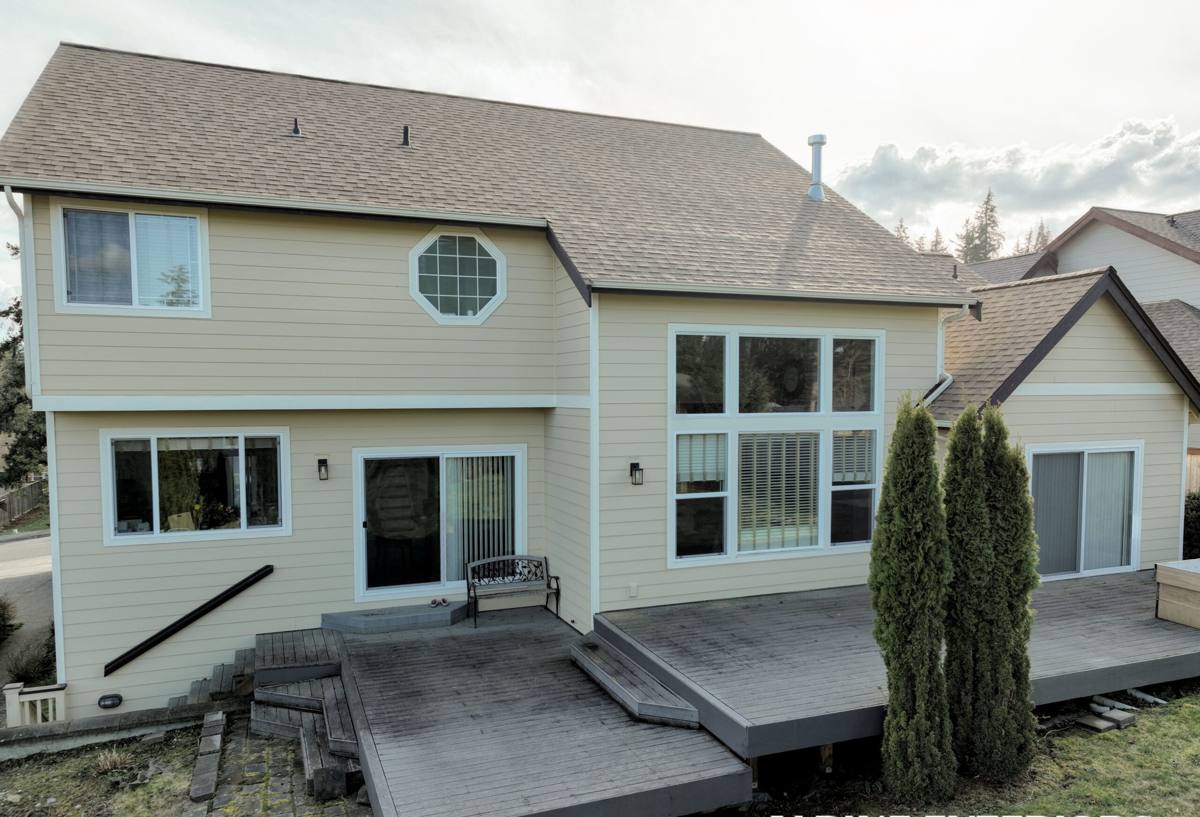
What Local Homes Actually Need From a Window Install
Most of the calls we get in this area aren't about windows that look bad — they're about windows that have started performing badly. A few patterns show up again and again in Maple Falls and the surrounding foothill areas:
- Condensation and fogged glass from failed seals, worse in homes with wood stoves or propane heat and limited ventilation
- Soft or rotting sills and trim where old caulk-only installs let water track behind the frame instead of shedding it
- Moss and algae staining around window heads and sills, especially on north- and east-facing walls that stay shaded and damp longer
- Drafts and cold spots from single-pane or early dual-pane windows that were never designed for this level of sustained moisture and temperature swing
- Sticking or swollen sashes in older wood windows that absorb moisture faster than they can dry out between storms
None of these are unusual for a house this climate has worked on for years. They're also exactly what a correct installation is designed to prevent or resolve — which is why the install method matters as much as the window brand.
Moss Season and Window Openings
Moss doesn't just grow on roofs. In shaded, damp corners of a property — under eaves, behind landscaping, on north walls — it takes hold on window sills, trim, and cladding too. Once moss establishes itself around a window opening, it holds moisture against the surface far longer than open air would, which accelerates wood rot and breaks down caulk and sealant faster than manufacturers rate for. Part of doing this job right in Maple Falls means detailing the install so water sheds away from the opening instead of sitting there long enough for moss to take hold in the first place.
What a Correct Installation Actually Involves
Swapping an old window for a new one in the same hole is the easy part. The part that determines whether that window is still performing well in ten or twenty years is everything around it — the flashing, the water management, and how the opening ties into the existing wall assembly. A correct installation in this climate includes:
- Removing the old unit and fully inspecting the rough opening for hidden rot, soft framing, or prior water damage before anything new goes in
- Installing a sloped sill pan so any water that does get past the window has somewhere to go besides the framing
- Flashing the opening in the correct shingle-lap order — sill, sides, then head — so water is always directed outward and downward, never trapped
- Using compatible sealants and flashing tapes that bond properly to the existing wall material, rather than relying on caulk alone to do a flashing system's job
- Setting the window level, plumb, and square, and shimming it correctly so the frame isn't under stress that can crack seals over time
- Insulating the gap between the window frame and rough opening properly — not overpacked, not left hollow
- Finishing trim and exterior detailing so water is shed away from the opening rather than channeled toward it
Skip any one of these steps and the window can still look right on install day. The problems show up later, quietly, inside the wall — which is exactly the kind of failure this climate is good at hiding until it's expensive to fix.
Choosing the Right Window Material for This Climate
There's no single "best" window for every home, but some materials handle sustained moisture and temperature swings better than others. Here's how the common options compare for a climate like Maple Falls':
| Frame Material | Moisture Behavior | Maintenance | Typical Fit for This Climate |
|---|---|---|---|
| Vinyl | Won't rot or absorb moisture; seams and welds are the main long-term concern | Low — occasional cleaning | Strong all-around choice for most Maple Falls homes |
| Fiberglass | Very stable in wet/dry and hot/cold cycling; minimal expansion or contraction | Low | Excellent for exposed or high-moisture wall areas |
| Wood (unclad) | Attractive but absorbs moisture readily; needs a well-maintained exterior finish | High — regular refinishing | Workable only with disciplined upkeep; higher risk in shaded, damp spots |
| Wood-clad (aluminum/vinyl exterior) | Exterior face resists moisture; interior wood still needs some care | Moderate | Good middle ground where a wood interior look matters |
We don't push one material on every job — the right call depends on the wall's exposure, how much sun and shade it gets, and what the homeowner wants to maintain long-term. What we won't do is put a moisture-sensitive product into a wall area that gets heavy, sustained wetting without being upfront about the maintenance commitment that comes with it.
Cost Factors for Maple Falls Window Installation
Pricing on window installation varies a lot based on the scope of the job, not just the window itself. Broad factors that move the price up or down:
| Factor | Why It Matters |
|---|---|
| Retrofit vs. full-frame replacement | Full-frame work exposes and repairs the rough opening; retrofit reuses the existing frame and is faster but hides more risk if the opening was already damaged |
| Hidden rot or water damage | Common in older homes here; framing repair adds labor and material but is far cheaper to fix now than after a full wall failure |
| Window size and count | Larger openings and whole-house jobs bring per-unit costs down slightly versus one-off replacements |
| Frame material | Vinyl is typically the most economical; fiberglass and wood-clad options cost more upfront but shift the maintenance/lifespan tradeoff |
| Trim and exterior detailing | Matching existing trim profiles or upgrading flashing details adds labor but directly affects how well the install sheds water long-term |
We'd rather walk a homeowner through these factors on-site than quote a number sight unseen — a lot of the real cost drivers only show up once the old window is out and we can see the condition of the opening.
How We Approach a Maple Falls Window Job
- On-site assessment — we look at each opening, note sun/shade exposure, drainage patterns, and any visible signs of past moisture issues
- Honest scoping — we tell you upfront if we expect hidden rot or framing damage based on the age and condition of the home, so there are no surprises mid-job
- Removal and inspection — once the old window is out, we check the framing before anything new goes in
- Correct flashing and sealing — sill pan, shingle-lap flashing, and compatible sealants, every time, not as an upsell
- Precise setting — level, plumb, square, properly shimmed and insulated
- Exterior and interior finish work — trim, caulking, and detailing that sheds water away from the opening
- Final walkthrough — we check operation, seals, and finish work with you before we call the job done
Why It Matters to Hire a Crew That Works This Area
Whatcom County's coastal-to-foothill weather gradient means a window install method that works fine in a drier part of the state doesn't automatically hold up around Maple Falls. A crew that regularly works this area already knows which wall orientations take the worst weather, how long moss season really runs, and where older homes in this part of the county tend to have hidden rot from decades of exposure. That local knowledge shows up in small decisions — how flashing is lapped, which sealants are used, how trim is detailed — that determine whether an install is still watertight in ten years or starting to fail in three.
It also matters for accountability. A local crew is easy to reach if a question comes up after the job, and has a reputation in the community worth protecting. That's a different incentive structure than a crew passing through from out of the area on a one-off job.
After Installation: What Homeowners Can Do
A correctly installed window still benefits from basic upkeep, especially in this climate:
- Keep gutters and downspouts clear so water isn't overflowing near window heads
- Trim back vegetation that shades window openings and keeps them damp longer than necessary
- Check and refresh exterior caulking every year or two, since even good sealants age faster under constant moisture cycling
- Watch for soft spots in exterior trim or sills, which are the earliest visible sign of a developing problem
- Wipe down interior sills during heavy condensation periods to keep moisture from sitting on the frame
None of this replaces a correct installation — it just protects the investment once the hard work is already done right.
If you're weighing window replacement for a home in Maple Falls, we're glad to take a look and give you a straight, no-pressure assessment of what your windows and openings actually need. Use the form below to request a free estimate.