 Sumas Window
 Decks Built for Everson's Weather, Not Just Its View
Everson sits in a part of Whatcom County where the weather doesn't do a homeowner any favors. Between the driving rain off the Nooksack valley, the damp marine-influenced air that rolls through much of northwest Washington, and a moss season that can stretch from October well into spring, an outdoor deck here works harder than it would almost anywhere else in the state. A deck built to a generic national spec will show its age in Everson within a few seasons — cupped boards, green streaks on the north side, soft spots where fasteners have started to back out. A deck built for this specific climate holds its line for decades.
That's the difference we build for. We're not writing about decks in the abstract — this is what we see on Everson and Sumas properties, and what we build to hold up against it.
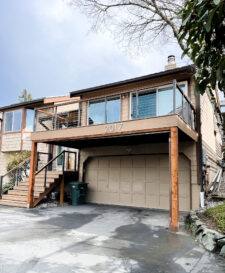
What Local Homes Actually Need From a Deck
Every deck has to handle structural loads, foot traffic, and weather. In this part of Whatcom County, weather is the variable that does the most damage over time, and it shows up in three main ways:
Moisture that doesn't let up
Long stretches of steady rain mean a deck surface rarely gets a full day to dry out between storms. Water sits in joints, around fastener heads, and in any spot where two pieces of wood or composite meet without a drainage path. Left alone, that trapped moisture is what starts rot in framing and delamination in lower-grade composite boards.
Moss and algae growth
Shaded decks, north-facing decks, and decks under trees pick up moss fast in this climate. Moss holds moisture against the deck surface even longer than plain rain does, and it makes boards slick — a real slip hazard on stairs and landings. The boards, spacing, and finish we choose all affect how much moss a deck collects and how easy it is to keep clean.
Freeze-thaw stress
Whatcom County doesn't get the deep freezes some inland areas do, but it gets enough freeze-thaw cycling each winter to matter. Water that's soaked into a crack or a poorly sealed cut end expands when it freezes, and that's how small cracks become big ones over a few winters.
What a Correctly Built Deck Involves
A deck that's going to hold up here isn't just about picking a nice-looking board. It comes down to what's underneath and how the whole system sheds water.
Framing and footings
Footings need to go below frost depth and bear on solid, undisturbed soil — not fill dirt, which is common on newer Everson lots that were graded during construction. Joists should be sized for the actual span and load, not just "what's always been done," and every cut end and connection point gets sealed before it's ever exposed to weather. Joist tape over the top of the frame is a small step that prevents a lot of hidden rot later.
Ledger attachment
The ledger board — where the deck attaches to the house — is the single most common failure point we find on older decks in this area. It needs proper flashing that directs water away from the house sheathing, not just lag bolts through siding. A poorly flashed ledger is a slow leak that can damage the house structure long before anyone notices a problem with the deck itself.
Decking material and fastening
Board choice affects moisture handling, moss resistance, and long-term maintenance. Hidden fastening systems reduce the fastener penetrations where water can enter the board, and proper board spacing lets air move underneath so things actually dry between storms instead of staying damp for days.
Drainage underneath
On decks used for outdoor living space below, or anywhere ground clearance is limited, a drainage system under the deck keeps water from pooling against footings and framing. This matters more on Everson lots with heavier clay soils that don't drain quickly on their own.
Decking Material Comparison for This Climate
| Material | Moisture Behavior | Moss Resistance | Maintenance |
|---|---|---|---|
| Pressure-treated pine | Absorbs water, prone to cupping if not sealed regularly | Low — porous surface holds moisture and organic growth | Annual cleaning and re-sealing |
| Cedar | Naturally moisture-resistant, still needs periodic sealing | Moderate | Sealing every 1-2 years, occasional board replacement |
| Capped composite | Sheds water well, minimal absorption | Good — smooth cap resists organic staining | Periodic washing, no sealing needed |
| Uncapped composite | Can absorb moisture at cut ends and edges over time | Moderate — can stain in shaded areas | Regular washing, watch cut ends |
There's no single "right" material for every Everson project — a shaded, low-clearance deck under fir trees has different needs than a full-sun deck off a south-facing kitchen. We walk through the trade-offs with you based on your specific site rather than pushing one product line.
Cost Factors Worth Understanding
| Factor | Why It Affects Price |
|---|---|
| Footing depth and soil conditions | Clay-heavy or fill soil common in Everson can require deeper or additional footings |
| Deck height and stairs | Elevated decks need more structural framing, railing, and stair work |
| Decking material | Composite and premium wood cost more up front but reduce long-term maintenance |
| Under-deck drainage | Adds cost but protects framing and creates usable dry space below |
| Railing and fastening system | Hidden fasteners and quality railing hardware cost more than basic exposed-screw systems |
We'll give you a written estimate that breaks these out clearly so you know what you're paying for, not just a bottom-line number.
How Our Process Works
1. Site visit and design
We start at your property, not behind a desk. We look at drainage, sun and shade exposure, soil condition, and how the deck ties into your home before we talk materials or layout.
2. Permitting
Deck permits in this area go through Whatcom County or the applicable local jurisdiction depending on where your Everson property falls. We handle the permit application and inspections so you're not chasing paperwork.
3. Framing and structural work
Footings, framing, and ledger attachment get built and inspected before decking ever goes down. This is the stage that determines whether the deck lasts 10 years or 30, so we don't rush it.
4. Decking, railing, and finish work
Boards, railing, stairs, and any lighting or finish details go in last, with attention to spacing and fastening that accounts for this area's rain and moss patterns.
5. Final walkthrough
We walk the finished deck with you, cover basic maintenance for the material you chose, and make sure everything meets both code and your expectations before we call the job done.
Maintenance That Actually Matters Here
- Sweep debris and standing water off the deck surface regularly during wet months, especially in shaded corners
- Clean moss and algae off boards and stairs before it builds up — a slick step is a real fall risk
- Check and clear gaps between boards so water can drain instead of pooling
- Inspect the ledger flashing and any spots where the deck meets the house once a year
- Re-seal wood decking on the schedule appropriate to the species — don't wait until it's visibly gray and dry
- Look underneath the deck occasionally for signs of moisture damage to framing, not just the visible surface
Common Problems We Find on Older Everson Decks
When we're called out to repair or replace an existing deck in this area, the same handful of issues show up again and again: ledger boards without proper flashing, footings that were never set to frost depth, decking installed with no gap for drainage, and moss buildup on north-facing sections that was never addressed until boards started to soften underneath it. Most of these are avoidable with correct build practices from the start, which is why we treat the framing and drainage stage as just as important as the visible decking material.
Why Hire a Crew That Already Works in Everson
A deck built to a spec sheet from a different climate is a deck that fights this one. Working regularly in and around Sumas and Everson means we already know which lots have drainage-heavy soil, which exposures collect moss fastest, and what actually holds up through a full Whatcom County winter and wet spring. That local experience shows up in the details — footing depth, flashing choices, board spacing — that don't show up on a brochure but decide how the deck performs ten years from now.
If you're planning a new deck or need an honest look at one that's showing its age, we're happy to walk your property and put together a straightforward, no-pressure estimate — just fill out the form below.