 Sumas Window
 Windows Built for Kendall's Climate, Not Just Any Climate
Kendall sits in the part of Whatcom County where the weather doesn't let up for months at a time. Homes here take on driving rain that comes in sideways off the valley, long stretches of gray damp that keep everything from siding to sashes wet for weeks, and a moss season that seems to start earlier and end later every year. Add in the salt-tinged air that moves through this corridor from the coast, and you've got a combination that's hard on any building material — windows included.
An energy-efficient window that works great in a dry climate can still underperform here if it wasn't chosen and installed with this specific moisture load in mind. That's the gap we focus on closing for Kendall homeowners: not just a window with a good energy rating on paper, but one that's detailed, flashed, and sealed to actually perform through a wet Whatcom County winter and hold that performance for years.
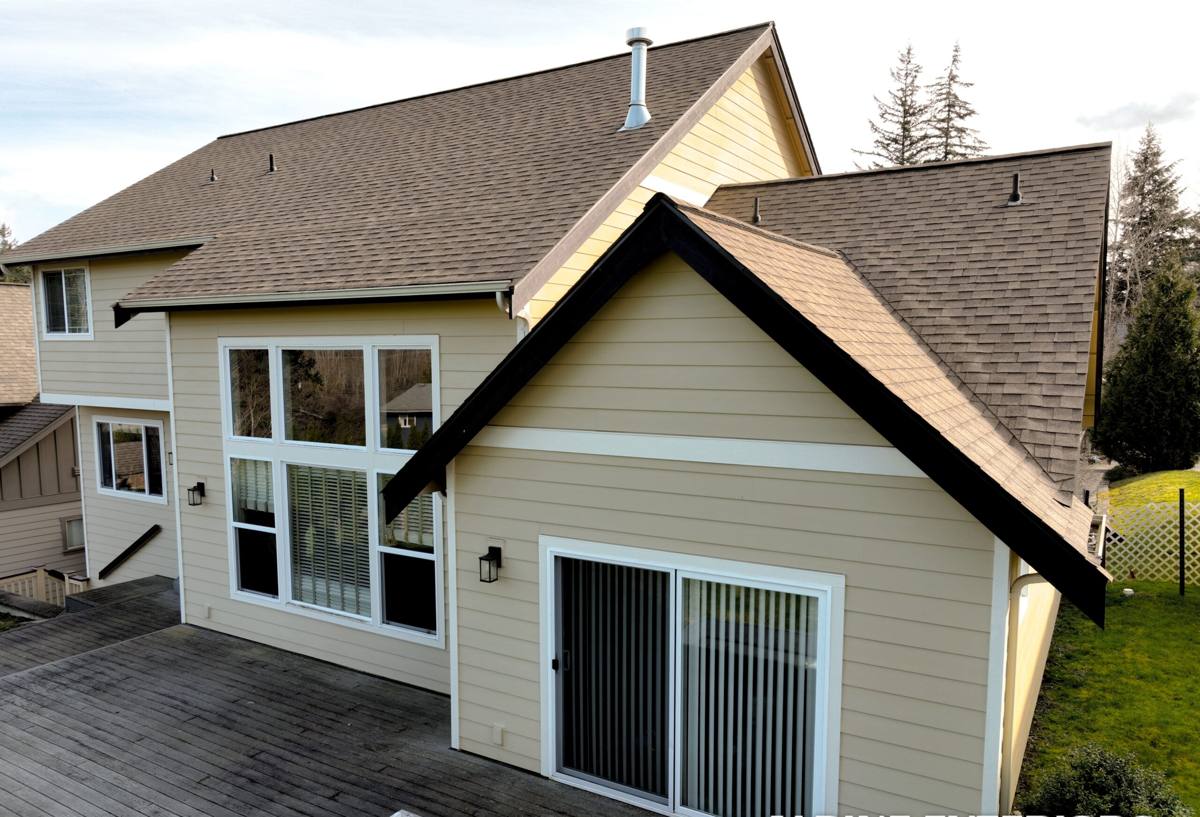
What "Energy-Efficient" Actually Means Here
Energy efficiency in a window comes down to a handful of measurable factors, and in a climate like Kendall's, some matter more than others.
The Ratings That Matter Most Locally
- U-Factor — measures how well the window resists heat loss. Lower is better for our cool, wet winters where homes are heating far more months than they're cooling.
- Air Leakage (AL) — measures how much air sneaks through the frame and sash. A low AL rating matters a lot here because wind-driven rain finds any gap that lets air through.
- Condensation Resistance — not always advertised loudly, but critical in a climate this humid. A window that fogs or sweats on the interior in winter is a sign the assembly isn't holding up to our moisture load.
- Solar Heat Gain Coefficient (SHGC) — less critical here than in sunnier climates, but still worth matching to your home's orientation and tree cover.
A window can carry a strong energy label and still fail locally if the installation doesn't back it up. We've seen good products underperform because of poor flashing detail, and mid-tier products outperform expectations because they were installed correctly for the conditions. Product and installation have to work together.
Where Old Windows Fail First in This Area
Whether we're replacing single-pane originals or an underperforming double-pane retrofit from decades back, the failure points in Kendall-area homes tend to repeat themselves.
Common Problem Areas
- Failed seals on older insulated glass units, showing up as fog or moisture trapped between the panes
- Wood sills and jambs softened by years of standing moisture, especially on north- and west-facing walls that dry out slowest
- Original flashing (or no flashing at all) that never accounted for the volume of wind-driven rain this area sees
- Moss and organic growth building up in window tracks and sill corners that stay damp longer than the rest of the house
- Warped or swollen sashes that no longer seal tight, letting cold air and moisture infiltrate around the edges
None of these are unusual for a home that's weathered many wet seasons in this part of the county. They're also exactly why a straight swap — pulling an old window and dropping in a new one without addressing what caused the failure — often just buys a homeowner a few more years before the same problem returns.
What a Correct Installation Involves
The window unit itself is maybe half the job. The other half is everything around it — the parts nobody sees once the trim goes back on, but that determine whether the window performs for 20 years or 5.
Our Process
- Assessment — we look at each opening individually, not just the house as a whole. Sun exposure, wind exposure, and existing moisture damage all factor into product and detailing choices.
- Removal and inspection — once the old unit is out, we check the rough opening for rot, soft framing, or prior water intrusion before anything new goes in. Problems found here get addressed, not covered up.
- Flashing and weather barrier integration — this is the step that matters most in a climate like Kendall's. Proper flashing tape, sill pans, and integration with the existing weather-resistive barrier are what actually keep driving rain out, regardless of how good the window itself is rated.
- Air sealing — low-expansion foam or backer rod and sealant around the frame, sized correctly so it insulates without bowing the frame out of square.
- Setting and shimming — the window has to be level, plumb, and square, with shims placed so the frame isn't stressed. A racked frame won't operate smoothly and won't seal evenly over time.
- Interior and exterior finish — trim, caulking, and touch-up done so the finished opening sheds water correctly on the outside and looks clean on the inside.
Skip or rush any one of these steps and you can end up with a new window that still leaks air, still fogs, or still lets moisture behind the wall — just with a higher price tag than the problem it was supposed to solve.
Choosing the Right Frame and Glass Package
There's no single "best" window for every Kendall home — the right choice depends on the home's exposure, age, and how long you plan to stay in it. Here's how the common frame materials compare for this climate specifically.
| Frame Material | How It Handles This Climate | Maintenance |
|---|---|---|
| Vinyl | Good moisture resistance, no painting needed; performs well in damp, salt-tinged air | Low — occasional cleaning |
| Fiberglass | Excellent dimensional stability in temperature and moisture swings; holds up well long-term | Low to moderate |
| Wood (clad exterior) | Attractive interior look; exterior cladding protects against rain, but any cladding breach exposes wood to rot risk | Higher — needs periodic inspection of seals and joints |
| Aluminum | Durable but conducts heat and cold readily; needs thermal breaks to perform reasonably in our winters | Low, but energy performance is a trade-off |
For most Kendall homes we work on, vinyl and fiberglass end up being the practical choices — both resist the moisture and organic growth this area throws at exterior materials without the long-term maintenance burden of an all-wood exterior. Clad-wood windows can still be the right call for homeowners prioritizing a specific interior look, as long as they understand the maintenance commitment that comes with it.
Glass Packages
Double-pane, low-E, argon-filled glass is the practical baseline for this climate — it balances cost with a meaningful jump in energy performance over older single-pane or early double-pane units. Triple-pane can make sense on north-facing walls or homes with especially high heating costs, but it's a bigger investment and not always necessary to hit your comfort and efficiency goals.
Signs Your Windows Are Costing You More Than They Should
Homeowners often wait longer than they should to replace windows because the signs are gradual rather than sudden. Watch for these:
- Drafts you can feel near the frame, especially during wind-driven rain events
- Fogging or moisture between panes on an insulated glass unit — a sign the seal has failed
- Visible moss, mildew, or dark staining building up on the sill or in the tracks
- Difficulty opening or closing sashes, often a sign of swelling or frame movement
- Noticeably higher heating bills compared to similar-sized homes nearby
- Soft or spongy trim or sill material when pressed
Any one of these is worth a look. A few together usually means the windows are actively working against your home's energy performance, not just aging cosmetically.
Why a Crew That Already Works Kendall Matters
Window installation isn't one-size-fits-all, and a crew that mostly works drier, milder climates can miss details that matter here. We work throughout the Sumas area and the surrounding Whatcom County communities, which means we're used to detailing for driving rain, sizing flashing for real wind exposure, and recognizing early moss and moisture damage before it becomes a structural problem. That local pattern recognition is hard to replace with a generic installation checklist.
It also means when something needs a warranty follow-up or a question comes up two winters later about how a window is performing in this specific weather, you're dealing with a crew that's still local and still accountable — not a traveling install team that's moved on to the next region.
What to Expect From an Estimate
A useful estimate isn't just a number — it's an honest look at what your home's openings actually need. When we walk a Kendall property, we're checking each window's exposure, the condition of the surrounding framing, and whether the existing flashing and weather barrier are doing their job. That assessment drives the recommendation, not a one-size package.
If you're weighing whether it's time to replace, or just want an honest read on how your current windows are performing against Whatcom County's wet-weather demands, we're glad to take a look. Reach out for a free, no-pressure estimate using the form below.