 Sumas Window
 Deck Replacement in Custer
Custer sits close enough to the water and far enough into Whatcom County's wet-season weather that decks here take a beating most homeowners don't fully appreciate until they're standing on a soft board. Between the long stretch of fall-through-spring rain, the salt-tinged air drifting in off the coast, and the moss that colonizes anything that stays damp for more than a few days, an aging deck in this area rarely fails gracefully. It fails from underneath, in the framing and connections you can't see from the surface.
This page is about one thing: replacing a deck the right way for a Custer property, not patching over problems that started below the decking boards.
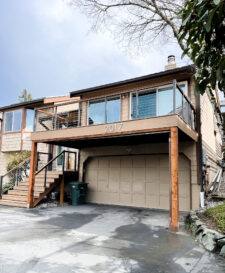
What This Climate Does to a Deck
Whatcom County's marine climate is mild, which is part of the problem — mild and wet for months at a time means wood-framed structures rarely get a real chance to dry out between storms. A few specific failure patterns show up again and again on decks in this area:
Moss and Trapped Moisture
Moss doesn't just grow on roofs. On a deck, it colonizes anywhere water sits — between boards with tight or closed gaps, in shaded corners under railings, and especially on the framing underneath where airflow is poor. Moss holds moisture against wood far longer than open air would, and that constant dampness is what drives rot, not any single rainstorm.
Salt Air and Fastener Corrosion
Custer's proximity to the coast means the air carries more salt than an inland property would see. Salt accelerates corrosion on fasteners, joist hangers, and any exposed metal hardware. A deck built with standard or under-spec coated screws and hangers will show rust streaks and weakening connections years before a comparable deck inland would.
Driving Rain at the Ledger Board
The single most common point of structural failure on older decks in this region is the ledger board — where the deck attaches to the house. Wind-driven rain pushes water sideways and upward behind poorly flashed ledger connections, and that water has nowhere to go but into the house's rim joist and the deck's structural attachment point. This is often invisible from above until the deck has real movement or the siding above it starts showing damage.
Freeze-Thaw Cycling
Whatcom County gets enough cold snaps each winter that water trapped in wood fiber, in cracked concrete footings, or around loose fasteners will freeze, expand, and widen existing damage. It's not the dramatic freeze-thaw of the mountains, but it's frequent enough over a deck's lifespan to matter.
Repair or Replace?
Not every tired-looking deck needs to come out. But there's a point where patching individual boards or sistering a few joists is just delaying a bigger job — and spending money on it. A few honest signs it's time to replace rather than repair:
- Soft, spongy, or springy sections of decking, especially near the ledger or stairs
- Visible rot, discoloration, or crumbling wood where posts meet footings
- Rust streaking from joist hangers or visible corrosion on structural fasteners
- A ledger board that shows gaps, staining, or soft wood where it meets the house
- Railings that wobble or flex under normal hand pressure — a safety issue, not cosmetic
- Persistent moss or algae that comes back within weeks of cleaning
- A deck older than 15-20 years that has never had the framing inspected, only the surface refinished
If the framing and footings are sound and it's just surface boards showing weather wear, a resurfacing or board-replacement job can make sense. Once the framing, ledger connection, or footings are in question, replacement is almost always the more honest recommendation — and the safer one.
What a Correct Deck Replacement Actually Involves
A deck that's built to hold up in this climate isn't just new boards on old bones. The parts that matter most are the parts you won't see once the project is done:
Ledger Flashing
Proper ledger board flashing — including flashing tape or a membrane behind the ledger, a metal drip cap above it, and correct fastening into the house's rim joist — is the single biggest factor in whether a deck stays dry at its most vulnerable connection point. This is where driving rain does its damage, and it's also where corners get cut on lower-quality jobs because it's hidden work.
Joist Hangers and Fasteners
Given the salt air in this area, hardware matters more here than it would on an inland build. Stainless steel or heavy-duty coated hardware rated for the fastener type in use, correctly nailed or screwed (not just a few fasteners per hanger), makes a measurable difference in how long the structure lasts before corrosion becomes a concern.
Footings Below Frost Depth
Post footings need to be sized and set to the depth required for this region's frost line and soil conditions, not guessed at. A footing that's too shallow or undersized will move over time, and that movement telegraphs up through the whole structure as squeaks, gaps, and eventual failure.
Airflow Under the Deck
Framing layout and joist spacing should allow for airflow underneath the deck surface, not trap moisture against the wood. This is one of the simplest ways to fight the moss-and-rot cycle common in this climate, and it costs nothing extra if it's planned into the framing from the start.
Board Spacing and Drainage
Decking boards need consistent gapping to let water shed through rather than pool on the surface or wick sideways into board edges. Tight, uneven gaps are a common shortcut that looks fine on day one and holds moss and standing water within a year.
Decking Material Options
Material choice matters, but it matters less than the framing underneath it. Here's how the common options compare for a property in this climate:
| Material | Upfront Cost | Maintenance | How It Handles This Climate |
|---|---|---|---|
| Pressure-treated wood | Lowest | Annual cleaning, periodic staining/sealing | Needs consistent upkeep to resist moss and moisture in wet seasons; most affordable to replace boards individually |
| Cedar | Moderate | Regular sealing to hold color and resist moisture | Naturally more rot-resistant than treated pine, but still needs maintenance in a climate this wet |
| Composite decking | Higher | Occasional washing, no staining/sealing | Resists rot and moisture absorption well; some early-generation composite products held moisture and grew moss more than expected, so board selection matters |
| PVC/capped composite | Highest | Minimal — washing only | Best overall moisture and moss resistance of the common options, at the highest material cost |
We're honest about trade-offs here rather than pushing whatever has the best margin. Wood costs less upfront but asks more of the homeowner every year. Composite and PVC cost more but shift that maintenance burden into the material itself. The right call depends on your budget and how much annual upkeep you actually want to do.
Permits and Code in Whatcom County
Most deck replacements that involve structural changes — new footings, a rebuilt ledger connection, or a deck over a certain height — require a permit through Whatcom County. Guardrail height, baluster spacing, and stair rise-and-run all have code minimums that exist for real safety reasons, not paperwork for its own sake. Skipping this step can create problems at resale or insurance time even if the deck looks fine day to day. We handle the permit and inspection process as part of the job rather than leaving it for the homeowner to sort out.
Our Process
- On-site assessment of the existing deck, framing, ledger connection, and footings
- Honest repair-vs-replace recommendation based on what we find, not what's easiest to sell
- Written estimate covering materials, framing work, and any permit requirements
- Full removal of the old deck, including inspection of the ledger area and rim joist behind it
- New footings set to proper depth, new or reinforced framing with corrosion-appropriate hardware
- Correct ledger flashing before any decking goes down
- Decking, railing, and stair installation per current code
- Final walkthrough and permit sign-off where applicable
Why a Crew That Works Custer Regularly Matters
A deck built without accounting for this area's salt air, moss cycle, and driving rain will show its weak points faster here than the same design would somewhere drier or further inland. A crew that regularly works properties in and around Sumas and Custer already knows which details — flashing, hardware grade, footing depth, airflow — actually matter for this specific stretch of Whatcom County, instead of applying a generic build spec and hoping it holds up.
If your deck is showing soft spots, rust stains, or persistent moss, we're happy to take a look and give you a straight answer on repair versus replacement. Reach out below for a free, no-pressure estimate.