 Sumas Window
 Bellingham sits close enough to the water and deep enough into Whatcom County's wet season that a deck built to a generic spec sheet won't hold up the way homeowners expect. Salt-tinged air off the Sound, months of driving rain, and a moss season that seems to start earlier every year all work on wood, fasteners, and footings in ways that don't show up until year three or four — right when a poorly built deck starts to cup, gray unevenly, or grow soft at the ledger board. We build decks for this specific climate, not for a national average, and that shows up in the details most contractors skip.
What Bellingham's Climate Actually Does to a Deck
The three forces that shorten a deck's life here are predictable, and a deck built with them in mind will outlast one that ignores them.
Salt Air
Bellingham's proximity to Puget Sound means airborne salt reaches homes well inland, especially on windy days. Salt accelerates corrosion on any exposed metal — screw heads, joist hangers, post bases, railing brackets. Standard zinc-coated fasteners can start showing rust bloom within a couple seasons if they weren't rated for the exposure.
Driving Rain
Rain here doesn't just fall straight down; wind-driven rain pushes water sideways into ledger connections, under railing posts, and into any gap where end grain is exposed. A deck that's fine in a dry climate can trap water at these joints and start rotting from the inside, long before the surface boards look bad.
Moss Season
Shaded yards, tree cover, and months of damp weather give moss and algae a long runway to establish on deck boards, especially on the north side of a house or under overhangs. Moss holds moisture against the wood surface and makes boards slick and dangerous underfoot, on top of accelerating decay.
None of this means a deck can't last decades in Bellingham — it means the build has to account for all three from the framing up, not just the visible surface.
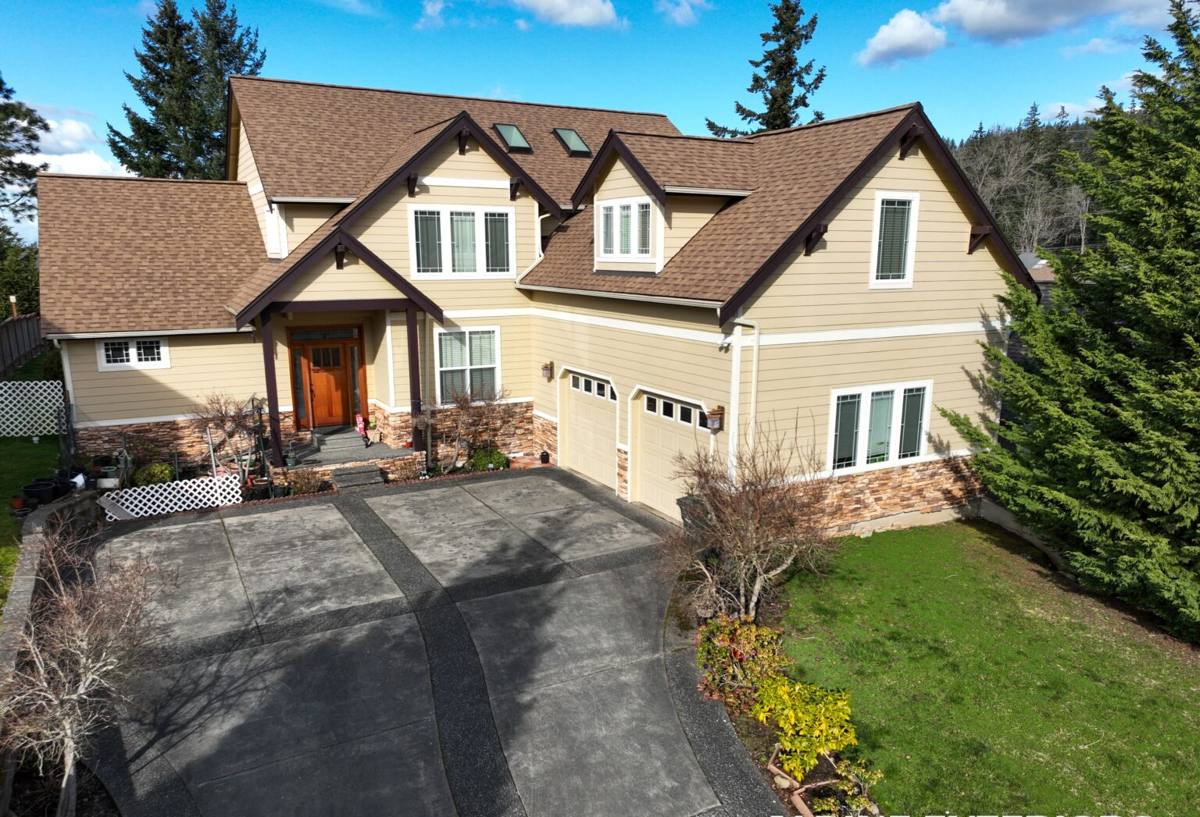
What a Bellingham-Area Home Actually Needs From a Deck
Lot conditions around Bellingham vary block to block — some properties sit open and exposed to wind and sun, others are tucked under mature fir and cedar canopy with heavy shade most of the day. Both situations call for different decisions, not the same deck built twice.
- Open, sun-exposed lots dry out faster between rain events, which is easier on wood but harder on finishes — UV plus moisture cycling fades stain faster than either alone.
- Shaded, tree-covered lots stay damp longer after rain, which is exactly the condition moss and rot need — these decks need better airflow underneath and more resistant materials.
- Sloped lots common in the hills around Bellingham often need taller footings and additional bracing, which changes the engineering, not just the appearance.
- Properties close to the water or open to prevailing wind need corrosion-resistant hardware as a baseline, not an upgrade.
A good contractor walks the site and adjusts the plan to these conditions before ever talking about board color.
Choosing the Right Decking Material for This Climate
There's no single "best" decking material — there's a best material for a given budget, shade level, and maintenance appetite. Here's how the common options actually perform under Whatcom County conditions.
| Material | Moisture Behavior | Moss Resistance | Maintenance | Typical Lifespan Here |
|---|---|---|---|---|
| Pressure-treated fir/pine | Good if properly sealed; absorbs water at cut ends and fastener holes | Low — needs regular cleaning and sealing to resist growth | Annual cleaning, re-sealing every 2-3 years | 15-20 years with upkeep |
| Cedar | Naturally moisture and rot resistant; still needs finish maintenance | Moderate — natural oils slow but don't stop growth | Cleaning and oiling every 1-2 years to hold color and grain | 20-25 years with upkeep |
| Composite (capped) | Excellent — doesn't absorb water into the board core | Higher — smooth or embossed surfaces shed moss more easily than raw wood | Periodic washing, no staining or sealing | 25-30+ years, backed by manufacturer warranty |
| PVC decking | Excellent — fully synthetic, no wood fiber to hold moisture | High | Washing only | 30+ years |
For shaded, damp lots we lean homeowners toward capped composite or PVC because raw wood in constant shade is fighting an uphill battle against moss no matter how often it's cleaned. For open, sunny lots, cedar or quality pressure-treated framing with a composite or hardwood surface can be a reasonable value trade-off, as long as the owner is realistic about the maintenance commitment.
What a Correctly Built Deck Involves
The parts of a deck nobody sees are the parts that determine whether it's still safe in fifteen years. This is where cutting corners does the most damage.
Footings and Framing
Footings need to be sized and set to local frost depth and soil conditions, not guessed at. Undersized or shallow footings are a common cause of deck settling and railing wobble down the line, especially on the sloped or clay-heavy soils found in parts of Whatcom County.
Ledger Attachment and Flashing
The ledger board — where the deck attaches to the house — is the single most common failure point on decks in wet climates. Proper flashing (metal, not just building paper) has to direct water away from this joint, and the connection needs corrosion-resistant lag bolts or structural screws, not deck screws pressed into service.
Joist Protection
Joist tape over the top edge of each joist stops water from soaking into end grain and the fastener holes where deck screws penetrate — a small material cost that prevents the most common spot for hidden rot.
Fasteners and Hardware
Given the salt air near the Sound, we spec stainless steel or heavy hot-dip galvanized hardware rated for coastal exposure rather than standard zinc-coated fasteners, which corrode faster here than in drier inland climates.
Airflow and Drainage Underneath
Low decks built tight to the ground trap moisture underneath with nowhere to go, which is exactly the environment moss and rot favor. Proper clearance, and grading that moves water away from the structure, matters as much as anything visible on the surface.
Our Deck Building Process
- Site walk and assessment — we look at sun exposure, tree cover, slope, drainage, and how the deck ties into the existing structure before recommending materials.
- Design and material selection — sized, budgeted, and matched to the site conditions rather than a one-size-fits-all package.
- Permitting — we handle the permit application and inspection scheduling required for the jurisdiction the property falls under.
- Footings and framing — footings set to depth, structural framing built with corrosion-resistant hardware throughout.
- Ledger flashing and waterproofing — the connection to the house gets metal flashing and proper fastening before anything else proceeds.
- Decking and railing installation — boards and railings installed per manufacturer spacing and fastening specs, which affects both appearance and drainage.
- Final walkthrough — we go over care instructions specific to the material installed, including what moss and moisture maintenance actually looks like for that product.
Maintenance That Actually Matters in This Climate
Every deck needs some upkeep — the question is how much, and how often. Skipping this list is the most common reason a well-built deck starts looking tired early.
- Sweep debris and needles off the deck regularly, especially in fall — trapped organic matter holds moisture and feeds moss.
- Rinse or lightly scrub shaded areas and north-facing sections more often than sun-exposed areas, since that's where moss establishes first.
- Check and clear gaps between boards each fall so water and debris can drain instead of pooling.
- Inspect the ledger flashing and any visible fasteners yearly for rust staining or gaps in the flashing.
- Reseal or refinish wood decking on the manufacturer's recommended schedule — waiting until it looks bad means the wood has already been unprotected for a while.
- Confirm gutters and downspouts near the deck aren't dumping extra water onto or under the structure.
Permits and Code Considerations
Deck permitting requirements vary by jurisdiction in Whatcom County, and requirements typically cover footing depth, railing height, guard spacing, and structural attachment to the house. Skipping the permit process can create real problems at resale, when an unpermitted structure has to be disclosed or brought up to code retroactively. We handle the permit application and coordinate inspections as part of the build, so the homeowner isn't left navigating that process alone.
Why Hire a Crew That Already Works in This Area
A deck built from a plan that ignores Bellingham's actual weather pattern — the salt exposure, the wind-driven rain, the shaded lots that stay damp for days after a storm — is a deck that will need real repair work well before its time. Crews that build here regularly know which fastener grade holds up, which ledger details actually keep water out, and which materials are worth the extra upfront cost on a shaded lot versus a sunny one. That local pattern recognition is the difference between a deck that needs attention every year and one that just needs the basic care on the checklist above.
If you're planning a new deck or replacing one that's showing its age, we're happy to walk the site, talk through material options for your specific lot conditions, and put together a straightforward estimate — no pressure, no obligation. Use the form below to get started.